

If you are learning how to get into commercial real estate, you are probably looking for a way to build income, grow wealth, or start a new career in property.
Commercial real estate, or CRE, includes buildings used for business and investment purposes. That can mean office buildings, retail spaces, warehouses, multifamily properties, and mixed-use buildings. These are very different from a typical single-family home.
Many beginners are drawn to CRE because it can offer steady income, long-term value, and more professional opportunities. But it is not something to rush into. You need research, capital, networking, and patience.
What Is Commercial Real Estate?
Understanding commercial property
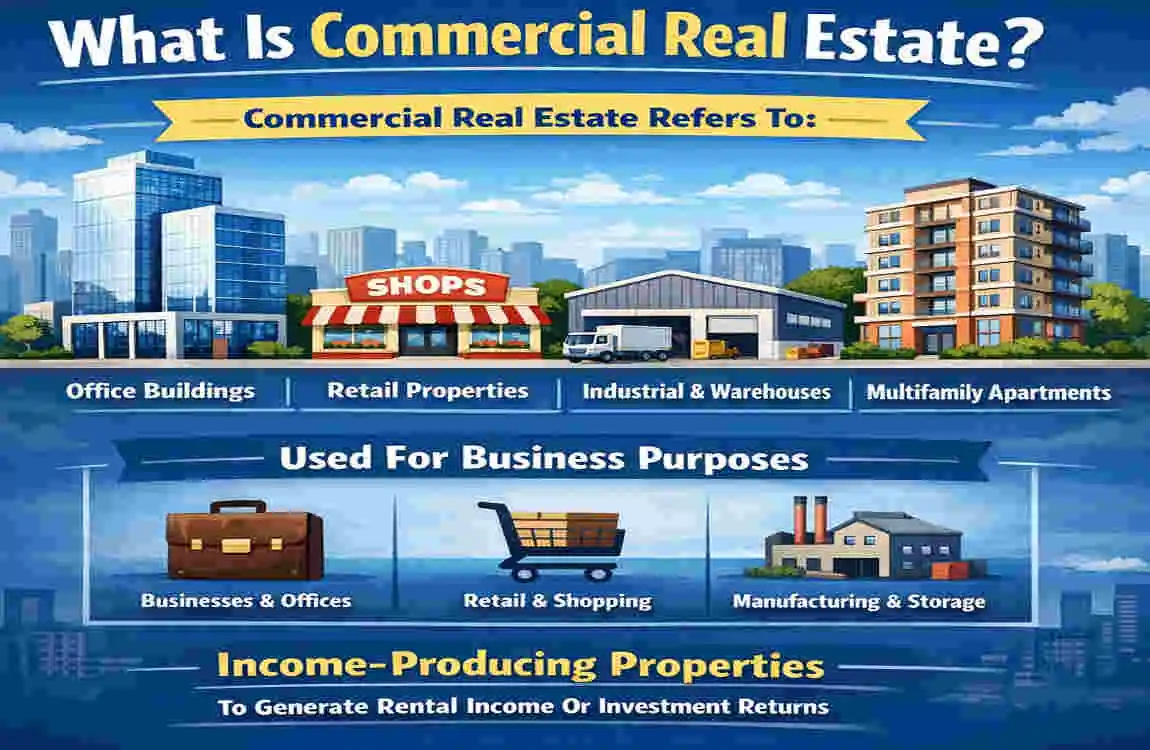
Commercial real estate is property used to generate income or support business activity. Unlike a house you live in, a commercial building is usually leased to businesses, tenants, or multiple users.
Common CRE property types include:
- Office
- Retail
- Industrial
- Multifamily
- Mixed-use
How commercial real estate makes money
CRE can produce income in several ways. The most common are:
- Rental income from tenants
- Property appreciation over time
- Lease income from business tenants
- Value-add improvements that raise the property’s worth
Why consider commercial real estate?
Many people like CRE because it can offer more income potential than some residential investments. It also gives you more ways to participate, even if you do not buy a building right away.
How to Get Into Commercial Real Estate as a Beginner
Learn the basics
Before you invest, learn the core terms and ideas. Focus on things like:
- Leases
- Property valuation
- Market analysis
- Financing
- NOI
- Cap rate
- Cash flow
- Occupancy
These terms may sound technical at first, but they are not hard once you see how they work together.
Choose your commercial real estate path.
You do not have to become an investor immediately. There are many ways to enter the field.
Path What It Means Good For
Broker or agent Helps buy and sell CRE Sales and networking
Investor Owns income property Long-term wealth building
Property manager Handles daily operations Hands-on experience
Developer Creates new projects Larger-scale work
Analyst Studies deals and markets Numbers-focused people
Lender Finances properties Banking and risk roles
REIT investor Invests through public real estate funds Beginners with less capital
Build your knowledge and skills.
To do well in CRE, you need more than interest. You need skills that help you read deals and work with people.
The most useful skills include:
- Financial analysis
- Negotiation
- Market research
- Communication
- Networking
- Due diligence
Start with a specific property type.
Each type of property comes with different risks and rewards.
- Multifamily can be easier to understand because people always need places to live.
- Retail depends heavily on location and tenant quality.
- Office may offer high income but can be more sensitive to market changes.
- Industrial often attracts strong demand for storage and logistics.
- Mixed-use can offer variety but may be more complex.
For a beginner, the best type is usually the one that matches your budget, risk comfort, and local market knowledge.
How to Invest in Commercial Real Estate
Buy a property directly.
This is the most direct path. You purchase a commercial property, finance it, and collect income from tenants.
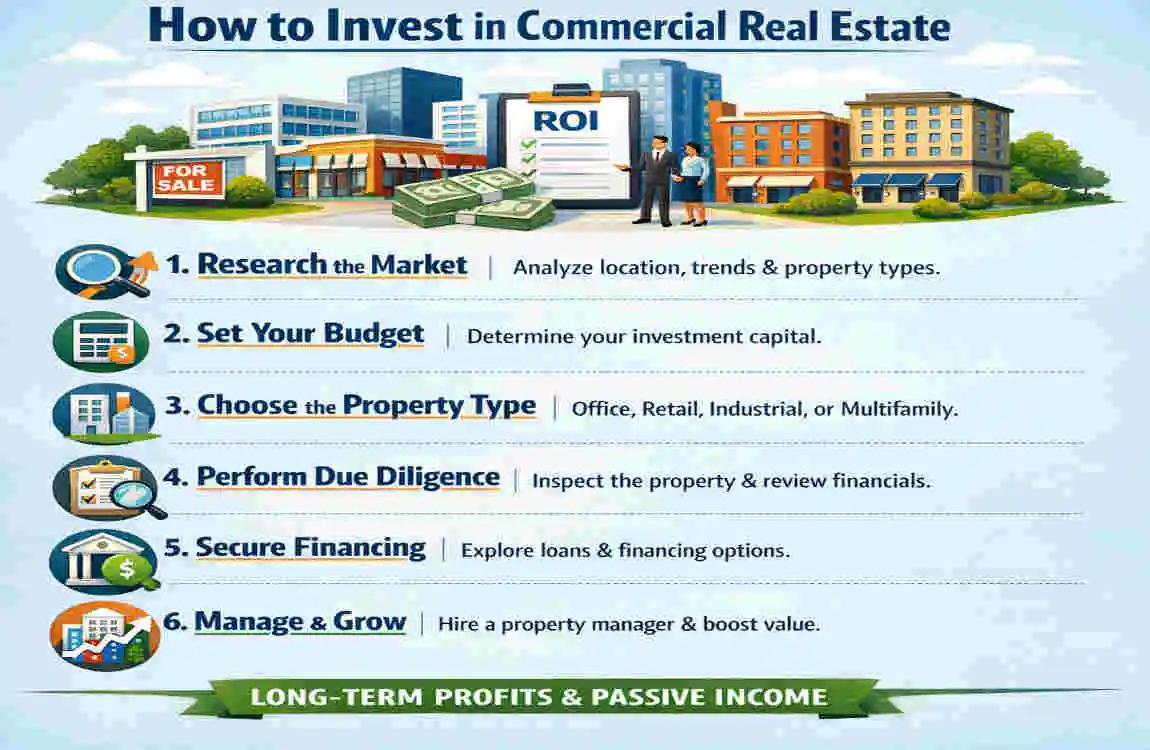
The process usually includes:
- Finding a property
- Reviewing the numbers
- Getting financing
- Inspecting the building
- Doing due diligence
- Closing the deal
Do not rush. A weak first deal can be expensive.
Partner with other investors
If you lack sufficient capital or experience, a partnership can help. One person may bring money, while another brings deal skills, management experience, or market knowledge.
This can work well, but everything should be in writing. Make sure each partner knows their role, share, and responsibilities.
Invest through REITs
A Real Estate Investment Trust, or REIT, lets you invest in real estate without owning a building yourself. This is often easier for beginners.
REITs can give you exposure to commercial property with less capital, but you give up direct control.
Consider crowdfunding and other options.
Real estate crowdfunding is another indirect route. You pool money with other investors and participate in a property deal.
This can be appealing, but you should still check:
- Fees
- Rules
- Liquidity
- Risk level
- Exit terms
How to Finance Your First Commercial Real Estate Deal
Understand your budget
Before you borrow or invest, look at your own financial picture. Review your:
- Savings
- Income
- Debt
- Credit
- Available capital
You should also keep extra cash for emergencies and as a reserve. Commercial property can have surprise expenses.
Explore commercial financing
Common financing options include:
- Bank loans
- Commercial mortgages
- SBA-related financing
- Private lenders
- Investor partnerships
Each one has different rules, rates, and approval requirements.
Understand key numbers
These numbers matter in every CRE deal:
- NOI: income after operating expenses
- Cap rate: shows return based on value and income
- Cash-on-cash return: compares cash invested to cash earned
- Debt service coverage Ratio: helps show if income can cover the loan
- Loan-to-value Ratio: compares the loan amount to the property value
Create a simple investment analysis.
A basic deal review should ask:
- How much rent will the property earn?
- What are the operating costs?
- What is the NOI?
- What will the financing cost?
- What is the likely cash flow?
If the numbers do not work on paper, the deal will not magically work in real life.
How to Find and Evaluate Commercial Properties
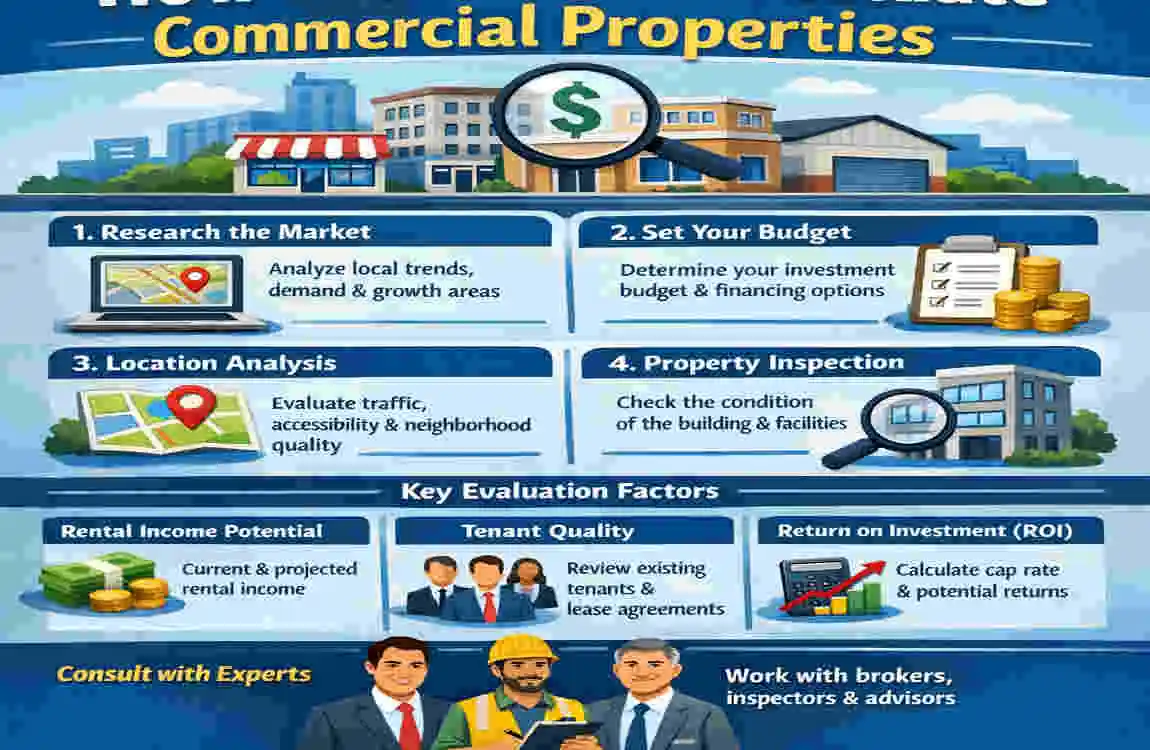
Research the local market.
A good deal starts with a good market. Look at:
- Population growth
- Job trends
- Business activity
- Vacancy levels
- Rental rates
- New development
You want to understand whether the area is growing or slowing down.
Find potential properties
You can find CRE opportunities through:
- Commercial brokers
- Property listings
- Networking
- Direct owner contacts
- Off-market deals
Often, the best deals come from relationships, not just online searches.
Perform due diligence
Due diligence means checking everything before you buy. Review:
- Leases
- Tenant quality
- Building condition
- Zoning
- Taxes
- Insurance
- Operating expenses
- Legal and environmental issues
This step protects you from unpleasant surprises.
Know when to walk away.
Not every deal is worth doing. Walk away if you see:
- Unrealistic projections
- Too much vacancy
- Major hidden repairs
- Weak tenant demand
- Bad financing
- A poor location
FAQ About How to Get Into Commercial Real Estate
How do I get into commercial real estate with no experience?
Start by learning the basics, networking with professionals, studying local properties, and gaining experience through brokerage, property management, analysis, or partnerships.
How much money do I need to get into commercial real estate?
It depends on the property and strategy. Buying directly usually takes more capital than investing through REITs or crowdfunding.
Is commercial real estate harder than residential real estate?
It can be more complex because of financing, leases, and due diligence. But beginners can learn it step by step.
Can I get into commercial real estate without buying a property?
Yes. You can work in the field or invest indirectly through REITs and similar options.
What type of commercial real estate is best for beginners?
There is no single best type. The right choice depends on your budget, goals, and local market.
What skills do I need for commercial real estate?
Useful skills include financial analysis, communication, negotiation, research, and networking.
Is commercial real estate a good career?
Yes, it can be a strong career for people who enjoy business, property, finance, and sales.
| Key Point | Quick Information |
|---|---|
| What Is Commercial Real Estate? | Properties used for business purposes, such as offices, retail spaces, warehouses, and apartments. |
| Learn the Basics | Understand property types, leases, financing, market trends, and investment returns. |
| Choose a Strategy | Consider investing, becoming an agent, wholesaling, property management, or development. |
| Build Your Network | Connect with brokers, lenders, investors, contractors, and other real estate professionals. |
| Find Opportunities | Research locations, property values, rental demand, and potential investment deals. |
