
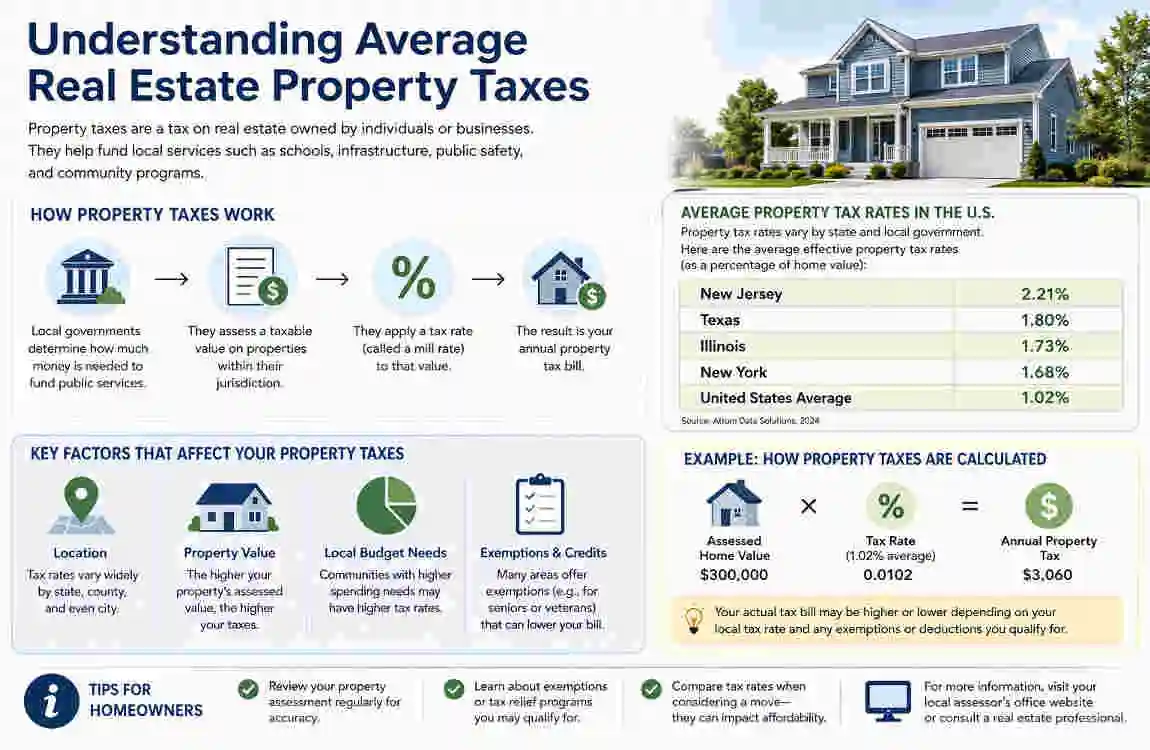
If you own a home or plan to buy one, property taxes are one cost you should never ignore. These taxes are a regular part of homeownership, and they can affect your monthly budget more than many people expect. In simple words, property taxes are the amount you pay to your local government based on the value of your home.
Understanding the average real estate house property tax helps you plan better, compare areas, and avoid surprises later. Some places have low property taxes, while others charge much more because of local needs, school funding, and public services. That means two homes with the same price can still have very different yearly tax bills.
What Is Real Estate Property Tax?
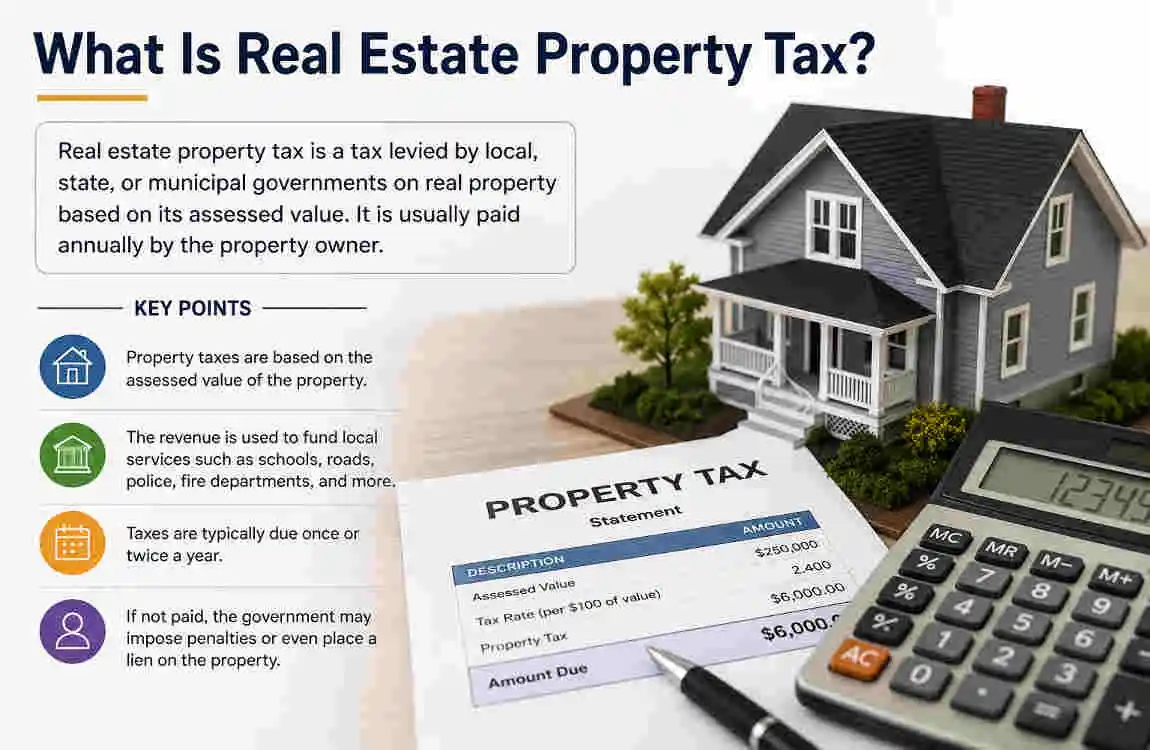
Definition of Property Tax
Real estate property tax is a tax charged on land and buildings. If you own a house, condo, or other real estate, you usually pay this tax every year. The amount depends on your property‘s assessed value and the tax rate in your area.
This tax is not one-time. It is a recurring cost, which means homeowners must keep paying it for as long as they own the property.
Who Collects Property Taxes?
Local governments usually collect property taxes. This may include the city, county, school district, or other local authority. In many cases, your property tax bill is split among several public services.
Why Property Taxes Exist
Property taxes help pay for important community services, such as:
- Public schools
- Police and fire services
- Roads and infrastructure
- Parks and local development
So, while property taxes may feel like an extra burden, they also support the area where you live.
What Is the Average Real Estate House Property Tax?
Understanding Average Property Tax Rates
The average real estate property tax is the typical amount homeowners pay, based on local rules and home value. There is no single fixed number for everyone because tax rates vary widely from place to place.
Some states, counties, or cities charge a small percentage, while others charge much more. A lower home price does not always mean a lower tax bill if the tax rate is high.
How Property Taxes Differ by Location
Location has one of the biggest effects on property taxes. Homes in one neighbourhood may have much higher taxes than homes just a few miles away. This happens because each local government sets its own budget and tax needs.
For example, areas with strong public services, better schools, or more infrastructure often collect more property tax revenue.
Factors That Influence Average Property Taxes
Several things affect the average tax amount, such as:
- Home value
- Local tax rates
- School district funding
- Public service needs
- Recent property improvements
Even small changes in these areas can affect your yearly bill.
How Real Estate Property Taxes Are Calculated
Property Assessment Value
The first step is to assess the value of your property. This is the value the local tax office assigns to your home. It may be close to market value, but not always the same.
If your home is worth more, your tax bill is usually higher. If the assessed value is too high, you may end up paying more than you should.
Tax Rate or Millage Rate
The second part is the tax rate, sometimes called the millage rate. This is the percentage used to calculate your property tax. Local governments decide this rate based on their annual funding needs.
Formula for Calculating Property Tax
A simple formula is:
Assessed Property Value x Tax Rate = Property Tax
Example of a Property Tax Calculation
If your home is assessed at $200,000 and your local tax rate is 1.5%, the annual property tax would be:
$200,000 x 0.015 = $3,000
That means you would owe $3,000 per year in property taxes.
This simple example shows why even a small change in tax rate or home value can make a big difference.
Factors That Affect Property Tax Amounts
Property Location
Where your home is located matters a lot. Different areas have different service costs, budgets, and tax rules. A house in one county may have a much higher tax bill than a similar house in another county.
Home Value and Size
Larger and more valuable homes usually have higher taxes. This is because tax offices often assess homes based on what they believe the property is worth.
Local Government Budgets
When a local government needs more money for schools, roads, or services, tax rates may increase. This can raise your bill even if your home value does not change much.
Market Conditions and Property Improvements
If housing prices rise in your area, property values may also go up. Home improvements can also raise your assessed value. For example, adding a new room, pool, or major upgrade may increase taxes.
Benefits of Paying Property Taxes
Better Public Schools
Property taxes are often a major source of school funding. This helps support teachers, classrooms, and school programs.
Road Maintenance and Infrastructure
Taxes also help maintain roads, bridges, sidewalks, and public facilities. These services improve daily life for everyone.
Emergency Services
Police, fire departments, and emergency response teams rely on tax money to stay active and prepared.
Community Programs and Development
Local programs, parks, libraries, and city improvements also depend on property tax revenue. In this way, taxes help build stronger communities.
How to Reduce Your Property Tax Burden
Apply for Tax Exemptions
Some homeowners may qualify for tax exemptions. These can lower a property’s taxable value and reduce the final bill.
Review Your Property Assessment
Always check your property assessment carefully. If the value seems too high, you may be paying more than necessary.
Appeal Incorrect Assessments
If you believe your home was assessed unfairly, you can file an appeal. This may help lower your property tax amount.
Take Advantage of Available Tax Relief Programs
Some areas offer tax relief for seniors, veterans, low-income families, or people with disabilities. It is worth asking your local office about available programs.
Tips for Homebuyers and Property Investors

Before buying, keep these simple tips in mind:
- Research local property tax rates
- Estimate annual tax costs
- Include taxes in your budget
- Compare taxes across neighbourhoods
- Check if future tax increases are likely
These steps can help you avoid financial stress later. A home with a lower purchase price may not always be the cheaper choice if its taxes are high.
Frequently Asked Questions
What is the average real estate house property tax?
It is the typical amount homeowners pay based on their property’s assessed value and the local tax rate.
How are property taxes calculated?
Property taxes are usually calculated by multiplying the assessed property value by the local tax rate.
Why do property taxes vary by location?
They vary because each local government sets its own budget, tax rate, and funding needs.
Can property taxes increase over time?
Yes, they can increase if property values rise or if local tax rates change.
Is property tax deductible?
In some places, certain property taxes may qualify for deductions, depending on local tax laws.
Here’s a short, info-focused table you can use as a starter for “average real estate property taxes in the UK,” tailored for a general audience.
