
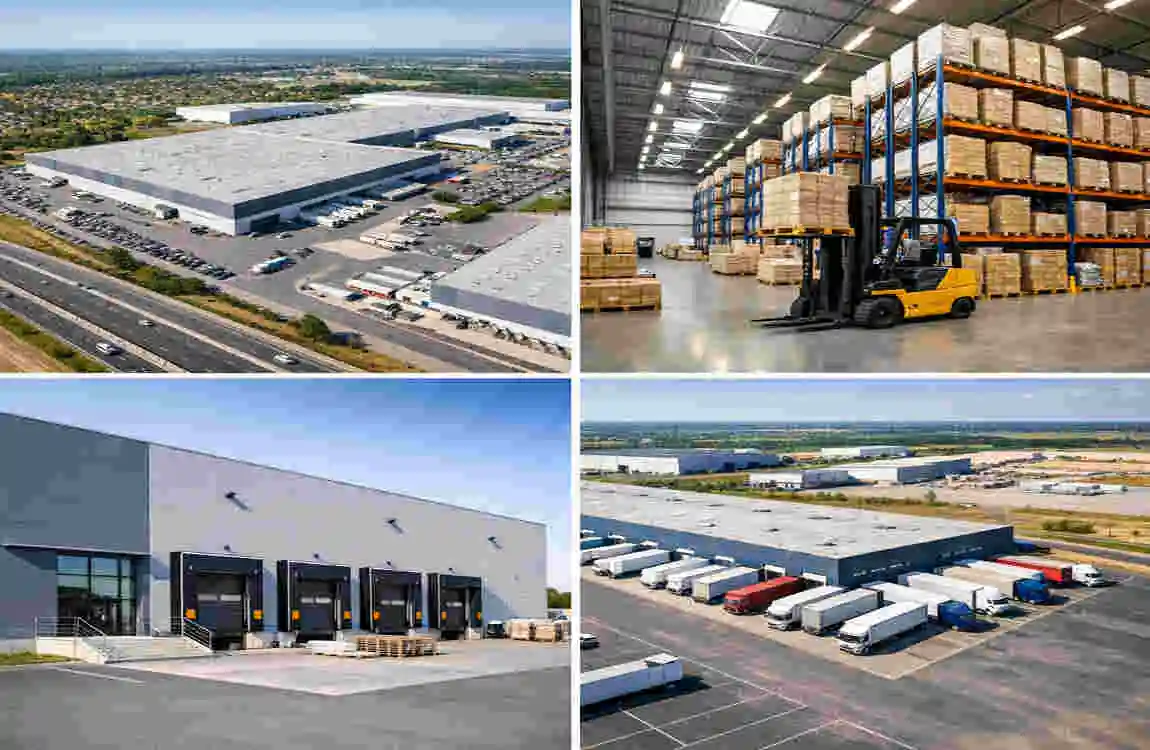
Industrial commercial real estate plays a big role in how modern business works. These properties are designed for manufacturing, storage, warehousing, distribution, and logistics.
If you are looking for the top industrial commercial real estate, it helps to understand what makes one property better than another. The right space can support smooth operations, lower costs, and long-term business growth.
What Is Industrial Commercial Real Estate?
Definition and Purpose
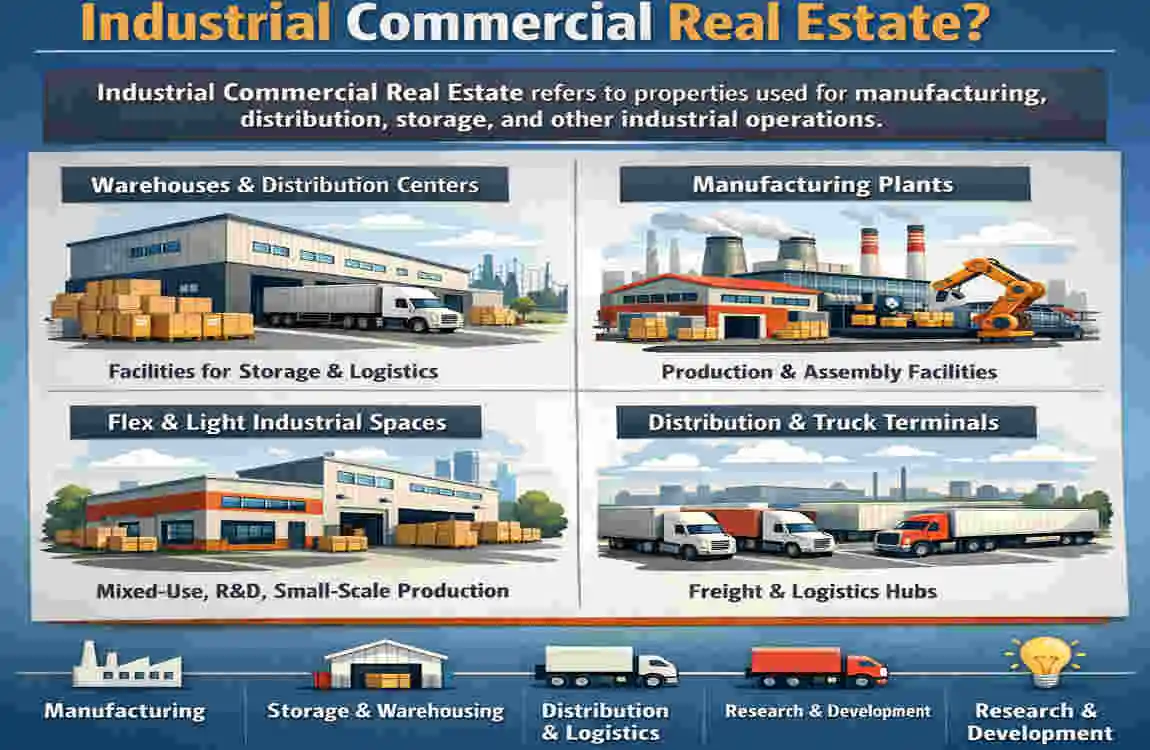
Industrial commercial real estate refers to buildings used for business operations that involve products, materials, or goods. These spaces are not made for living, unlike homes, and they differ from offices and retail stores.
Instead, they are built to handle production, storage, shipping, and large-scale movement of goods. That is why these properties often have loading areas, wide-open floor space, and more robust utility systems.
Common Types of Industrial Properties
Industrial properties come in several forms. The most common are:
- Warehouses
- Distribution centers
- Manufacturing facilities
- Flex industrial buildings
- Cold-storage facilities
- Logistics and fulfillment centers
Each type serves a different purpose. A warehouse may store inventory, while a distribution centre helps move products quickly to customers. A manufacturing facility may be used to build or assemble goods.
Why Location Matters
Location is one of the biggest factors in industrial real estate. A strong location can make daily operations much easier.
You should look at:
- Access to highways and transport routes
- Distance to customers and suppliers
- Availability of workers
- Local infrastructure and utilities
A property may look good on paper, but if trucks cannot reach it easily or workers cannot get there, it may not be a smart choice.
Why Is Industrial Commercial Real Estate Important?
Growing Demand for Industrial Space
The rise of e-commerce and online shopping has changed the market. Businesses now need more space to store items, sort orders, and ship products faster.
That has increased demand for warehouses and distribution centres. Supply chains also need more flexible space to keep goods moving without delay.
Benefits for Businesses
For business owners, industrial space can offer real value. It gives them room to:
- Store more inventory
- Move products efficiently
- Expand production
- Run operations in one place
This is especially useful for businesses that handle physical goods every day.
Benefits for Investors
Industrial property can also be attractive to investors. It may provide:
- Rental income
- Long-term tenant demand
- Portfolio diversification
- Potential property appreciation
Many investors like this market because industrial buildings often serve practical needs that remain in demand.
How to Choose the Top Industrial Commercial Real Estate
Evaluate the Property Location
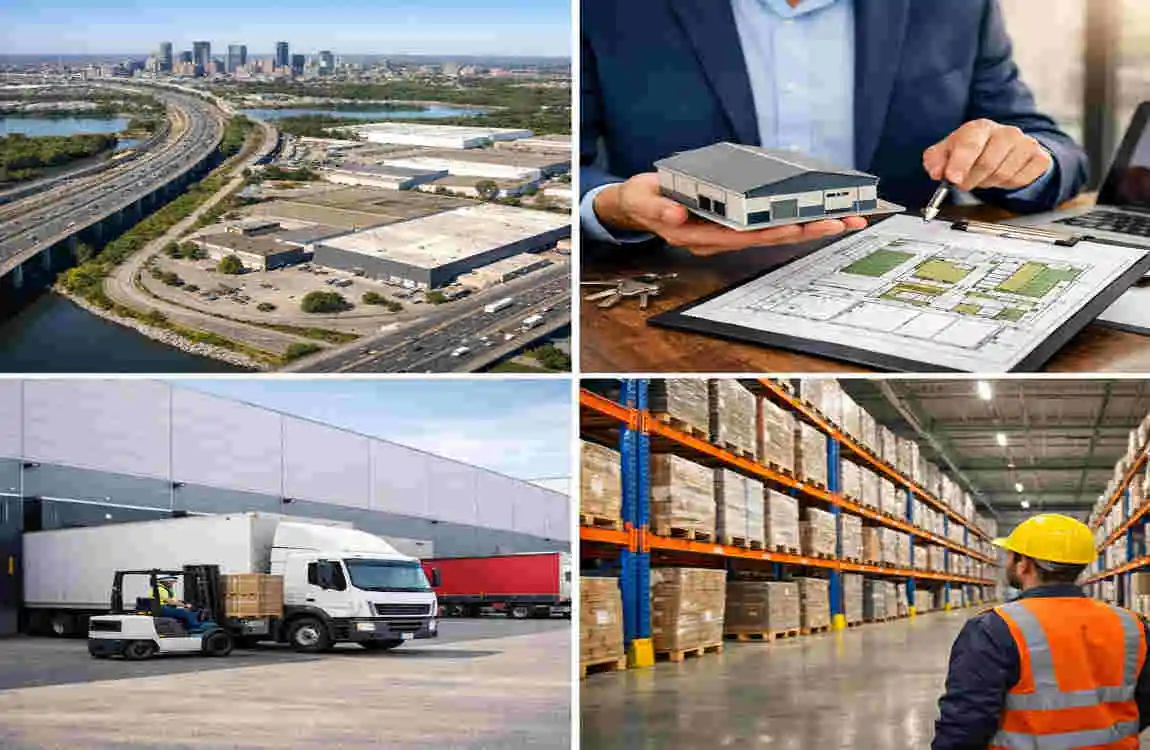
Start with the location. Ask yourself: Does this property support the business I want to run?
Check for nearby highways, shipping routes, suppliers, and commercial activity. Also look at future development plans in the area. A location that supports growth today may become even more valuable later.
Check Building Specifications
A strong industrial building should match the way you plan to use it. Important details include:
- Building size and layout
- Ceiling height
- Loading docks
- Parking
- Electrical capacity
- HVAC systems
- Warehouse and office ratios
For example, a business that needs large storage areas may prefer high ceilings and wide open floors. A company with office staff may need a better balance between office and workspace.
Review Zoning and Permits
Not every property can legally support every type of business. That is why zoning matters so much.
Before buying or leasing, confirm:
- The property allows your intended use
- Local rules do not limit operations
- Permits are available if needed
This step can save you from costly mistakes later.
Analyse Costs and Financial Potential
Do not focus only on the purchase or lease price. Look at the full picture.
Consider:
- Property taxes
- Insurance
- Maintenance
- Utilities
- Renovation costs
- Expected rental income
A property may seem affordable at first, but hidden expenses can quickly change the real cost.
Industrial Commercial Real Estate Investment Strategies
Buying Industrial Property
Buying industrial property can be a strong long-term move. It gives you ownership and may build value over time.
Still, buying requires careful planning. You should review financing, inspect the building, and study market demand before committing.
Leasing Industrial Space
Leasing is often a better option for businesses that want flexibility. It can help you grow without requiring a large upfront investment.
When leasing, pay attention to:
- Lease length
- Operating expenses
- Renewal options
- Maintenance responsibility
A lease should support your business goals, not limit them.
Developing Industrial Property
Some investors choose to build a new property from scratch. This may include a warehouse, logistics centre, or manufacturing facility.
Development can bring strong returns, but it also comes with more risk. You need land, permits, construction planning, infrastructure, and tenant demand.
Value-Add Opportunities
Sometimes the best deal is an older building with potential for improvement. A value-add property may need updates such as:
- Better loading areas
- Improved storage space
- Energy upgrades
- Modern office areas
- Updated safety systems
These changes can raise both the usefulness and the value of the property.
Key Factors to Consider Before Buying or Leasing
Property Condition
Always inspect the building carefully. Look at the:
- Roof
- Structure
- Electrical system
- Plumbing
- HVAC
- Loading areas
A weak building may lead to unpredictable repair costs.
Accessibility and Transportation
Transportation access can make or break an industrial property. Check if the site is close to:
- Highways
- Rail lines
- Airports
- Ports
- Major delivery routes
This matters even more for businesses that move goods quickly or in large volume.
Tenant and Market Demand
If you are investing, study the local market. Ask whether the area has strong tenant demand or high vacancy rates.
A market with steady demand can support better occupancy and more stable income.
Lease and Contract Terms
If you are leasing, read every part of the agreement. Important items include:
- Rent increases
- Maintenance duties
- Renewal clauses
- Insurance rules
- Use restrictions
These terms affect both cost and flexibility.
Professional Due Diligence
Do not go through the process alone. Work with:
- Commercial real estate agents
- Inspectors
- Attorneys
- Lenders
- Property managers
Their help can make the process safer and more informed.
Industrial Commercial Real Estate Trends and Future Outlook
E-Commerce and Last-Mile Logistics
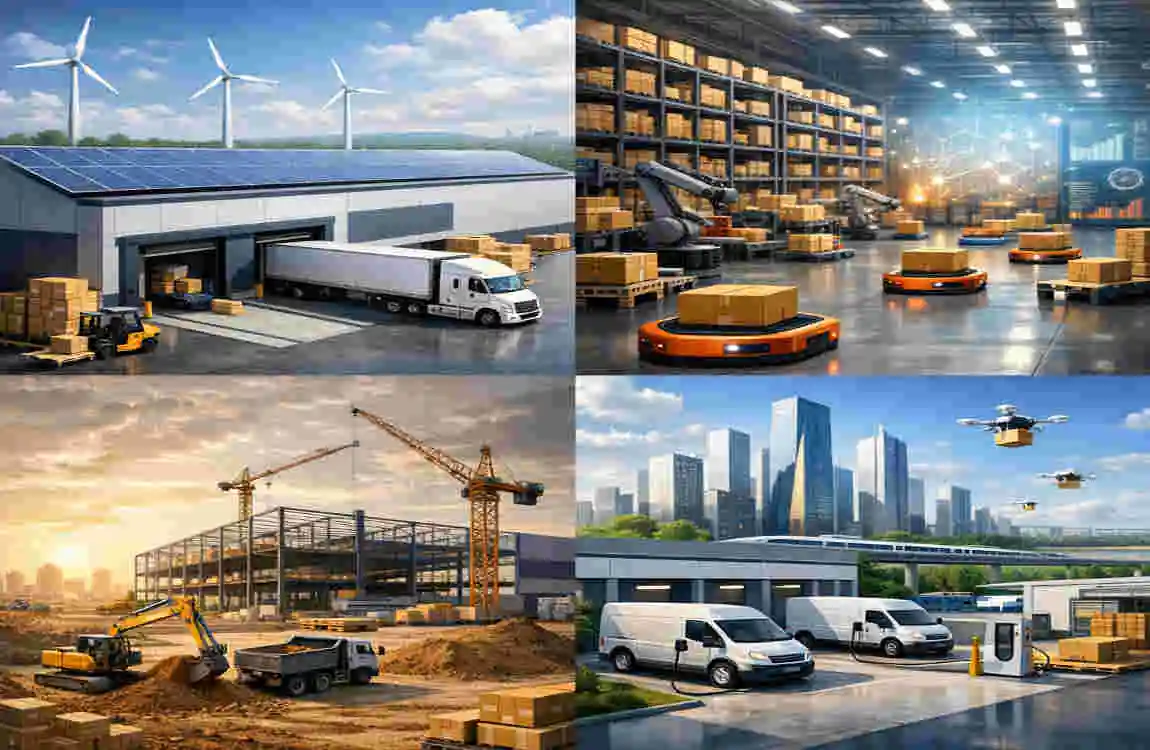
Today’s customers want faster delivery. That creates more demand for warehouses located near cities and busy population areas.
This is known as last-mile logistics, and it is one of the biggest drivers in industrial real estate.
Technology and Smart Warehouses
Many modern industrial buildings now include more technology. This can mean:
- Automation
- Robotics
- Inventory systems
- Smart building controls
These features can improve speed and reduce wasted time.
Sustainable Industrial Buildings
Energy efficiency is becoming more important. Many owners now look for:
- Energy-saving lighting
- Solar systems
- Efficient HVAC
- Sustainable construction materials
These upgrades can help lower operating costs and improve long-term value.
Flexible Industrial Spaces
Businesses often want properties that can serve multiple uses. Flexible spaces are becoming more popular because they can adapt as needs change.
What Investors and Businesses Should Watch
Keep an eye on:
- Rental demand
- Construction activity
- Interest rates
- Transportation infrastructure
- Local economic growth
- Supply and vacancy levels
These trends can affect both short-term and long-term decisions.
FAQ: Industrial Commercial Real Estate
What is industrial commercial real estate?
It is property used for storage, manufacturing, distribution, logistics, or similar business operations.
What are the most common types of industrial real estate?
The main types are warehouses, manufacturing buildings, distribution centres, flex spaces, and cold-storage properties.
Is industrial commercial real estate a good investment?
It can be. The outcome depends on location, building quality, tenant demand, financing, and market conditions.
What should I look for in an industrial property?
Focus on location, building specs, zoning, transportation access, operating costs, condition, and future demand.
How do I find the top industrial commercial real estate opportunities?
Compare properties based on location, use, cost, tenant demand, and long-term value. Professional market research also helps.
Is buying or leasing industrial property better?
That depends on your goals. Buying may suit long-term ownership, while leasing may be better if you need flexibility.
What affects the value of industrial commercial real estate?
Value usually depends on location, size, condition, accessibility, zoning, rental income, and market demand.
| Aspect | Key Information |
|---|---|
| What It Is | Commercial real estate used for industrial activities such as manufacturing, storage, and distribution. |
| Main Types | Warehouses, factories, distribution centers, industrial parks, and flex spaces. |
| Common Uses | Manufacturing, logistics, e-commerce, storage, packaging, and research facilities. |
| Key Benefits | Potential rental income, business demand, long-term leases, and investment diversification. |
| Important Factors | Location, zoning, accessibility, property condition, tenant demand, and operating costs. |
| Investment Risks | Vacancy, maintenance expenses, market changes, environmental issues, and changing business needs. |
| Best For | Investors and businesses seeking functional commercial space or long-term investment opportunities. |
