
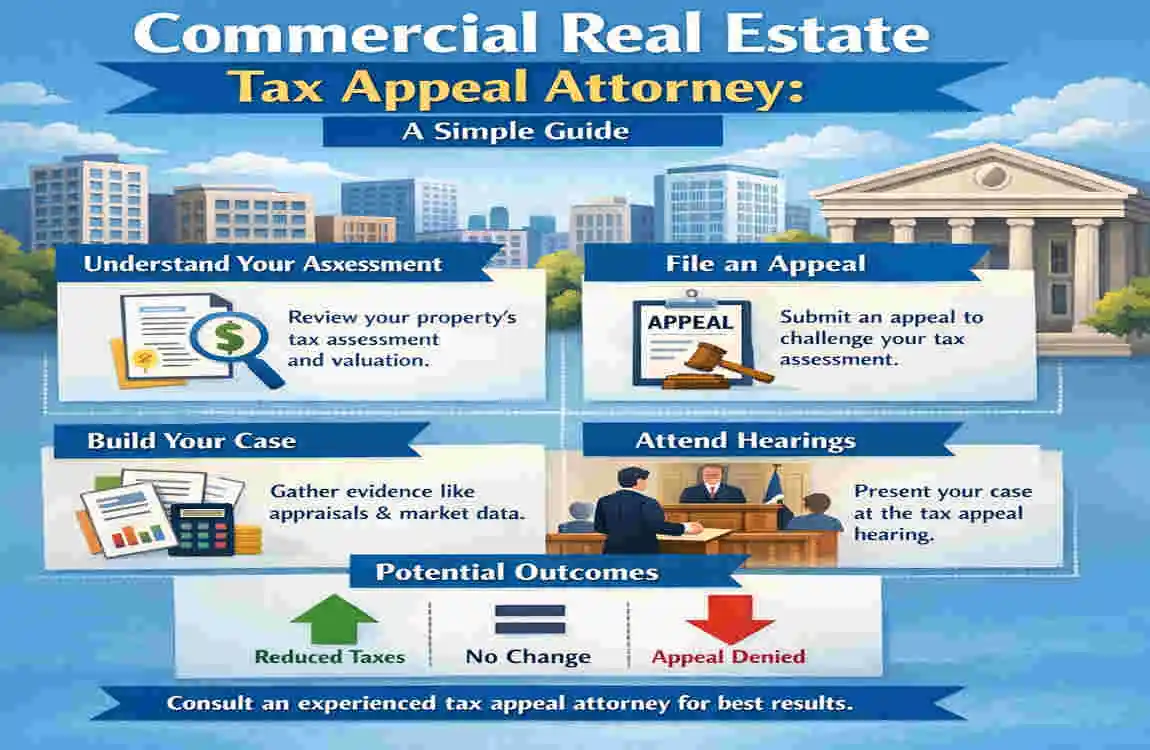
A commercial real estate tax appeal attorney helps property owners challenge a tax assessment that may be too high. If you own an office building, retail centre, warehouse, apartment complex, or other income-producing property, your tax bill can have a big impact on your bottom line.
Property taxes are often based on the value the local assessor assigns to your building. If that value is too high, you may end up paying more than you should. That is where an appeal can help.
What Is a Commercial Real Estate Tax Appeal Attorney?
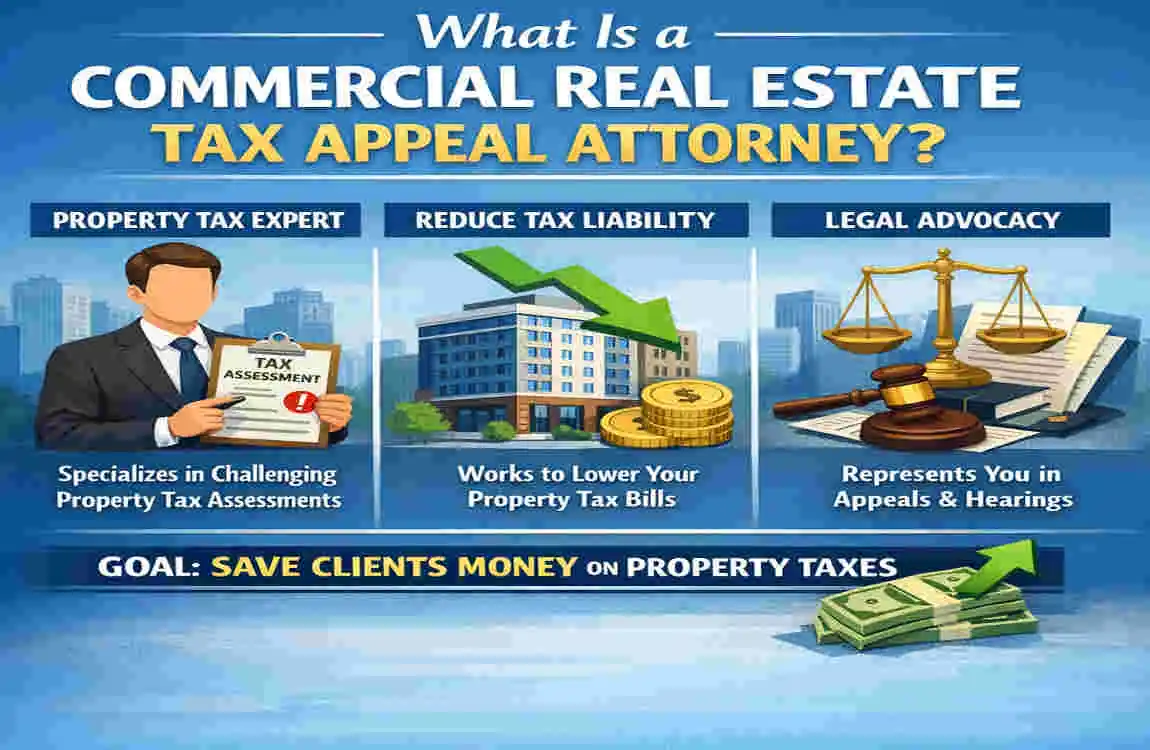
A commercial real estate tax appeal attorney is a lawyer who helps property owners challenge a commercial property tax assessment. Their job is to review the valuation, look for errors, gather evidence, and present a case for a lower assessed value when appropriate.
What Are Commercial Property Taxes?
Commercial property taxes are taxes charged on business-related real estate. These taxes are usually based on the property’s assessed value.
That assessment may affect your annual tax bill in a major way. If the property is valued too high, your taxes can rise even if your actual market value has not changed much.
Why Property Owners Challenge an Assessment
Owners appeal when they believe the assessor got something wrong. The issue may be the value itself, the property description, or the income data used in the calculation.
A tax appeal does not mean the property has no value. It simply means the owner believes the assessed value is unfair or inaccurate.
Tax Attorney, Real Estate Attorney, and Property Tax Consultant
These roles overlap a little, but they are not the same.
- A tax attorney may handle tax law issues more broadly.
- A real estate attorney may work on property deals, leases, disputes, or title issues.
- A property tax consultant usually focuses on valuation and appeal strategy, but is not always a lawyer.
A commercial real estate tax appeal attorney can be especially helpful when the appeal is complex, when deadlines are tight, or when legal arguments may matter.
When Hiring an Attorney May Help
Hiring an attorney may be useful if:
- The property is high-value
- The assessment seems far above market value
- The appeal involves legal or procedural issues
- You need help with hearings or negotiation
- The property has special income or occupancy concerns
If the tax bill is large, a successful appeal may lead to meaningful savings.
Why Commercial Property Owners Appeal Tax Assessments
Property owners may challenge a tax assessment for many reasons. Most of them come down to one thing: the assessment does not match the real situation.
The Property Was Assessed Too High
This is one of the most common reasons for an appeal.
If the assessor values your property above what a buyer would likely pay in the current market, your tax bill may be inflated.
Property Details Are Wrong
Sometimes the property record contains mistakes.
For example:
- Wrong square footage
- Incorrect building age
- Missing damage or depreciation
- Incorrect use type
- Extra improvements that no longer exist
Even a small data error can affect the assessment.
The Local Market Has Changed
Property values do not stay the same forever. Market conditions can shift because of:
- Lower demand
- Rising vacancy
- Higher interest rates
- Slower rent growth
- Neighborhood changes
If the market has weakened, the assessed value may need to reflect that.
Comparable Properties Are Assessed Lower
Assessors often use comparable properties to support a value. But if similar nearby buildings are assessed at a lower level, that may support your appeal.
This is especially true if those properties are similar in:
- Size
- Age
- Location
- Use type
- Income performance
Vacancy or Income Loss
For income-producing commercial property, vacancy and reduced income matter.
If your building is struggling to lease space or generate income, an old assessment may no longer be fair. The property’s earning power is often part of the valuation picture.
Why This Matters Financially
A high assessment can increase your taxes every year. That means an overvaluation does not just hurt once. It can affect your expenses for as long as the assessment stays in place.
For many owners, that is reason enough to review the tax bill carefully each year.
How a Commercial Real Estate Tax Appeal Works
The appeal process usually follows a series of steps. The exact process depends on the location, but the basic idea is similar in many places.
Reviewing the Property Assessment
The first step is to review the assessor’s records.
This may include:
- Assessed value
- Property description
- Building size
- Land size
- Use classification
- Income or valuation method used
Check whether the information is accurate and whether the value seems reasonable.
Gathering Supporting Evidence
A strong appeal needs evidence. That evidence may include:
- Recent sales of similar properties
- Income and expense records
- Property condition photos
- Appraisal reports
- Vacancy data
- Repair records
- Lease information
The more organised your evidence is, the easier it is to make your case.
Filing the Appeal
Every area has its own filing deadline. Missing the deadline can cost you the right to appeal that year.
You may need to submit:
- A form
- Supporting documents
- Ownership information
- A written argument
- Fee payment, if required
This is why it is smart to act early.
Attending the Hearing
In many cases, there is a hearing before an assessment board or similar authority.
At the hearing, the attorney may:
- Present evidence
- Explain why the value is too high
- Compare your property to similar properties
- Answer questions from the board or assessor
The result may be a reduction, no change, or, in some cases, further review.
What Does a Commercial Real Estate Tax Appeal Attorney Do?
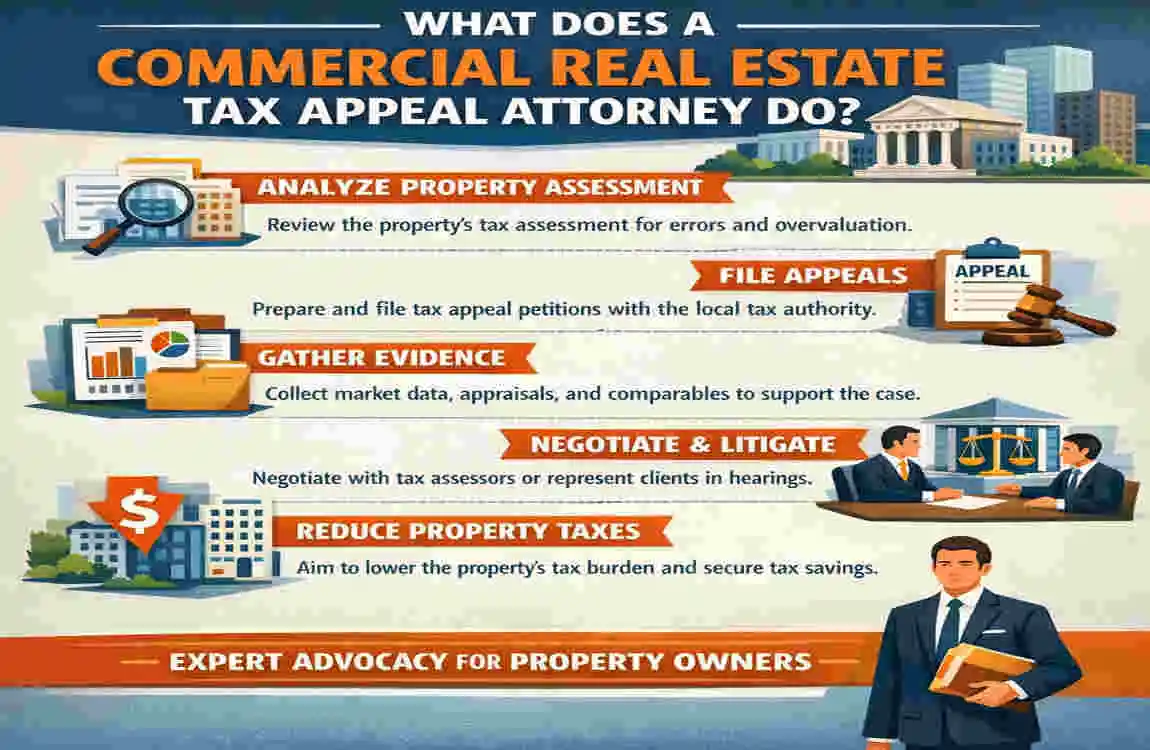
A good attorney does more than file paperwork. They help build a clear and organised case.
Analyse the Assessment
First, the attorney carefully reviews the tax assessment. They look for errors, missing facts, and signs that the value may be too high.
They may compare the assessed value to:
- Market value
- Income value
- Recent sales data
- Local assessment patterns
Research Comparable Properties
Comparable properties matter because they show how the market is treating similar buildings.
The attorney may look for properties that are similar in:
- Type
- Size
- Age
- Location
- Occupancy
- Condition
This helps support an argument that your property should be valued differently.
Review Valuation Methods
Commercial property may be valued using different methods, such as market sales, income analysis, or cost-based approaches.
A commercial real estate tax appeal attorney can look at the method used and ask whether it makes sense for your property. If the wrong method was used, that may help your appeal.
Build an Evidence-Based Appeal
The best appeals are based on facts, not guesswork.
The attorney may organise:
- Property records
- Rent rolls
- Appraisal evidence
- Sales comparisons
- Photos
- Repair reports
- Lease and vacancy data
Communicate With Taxing Authorities
Sometimes an appeal can be resolved before a full hearing. In other cases, communication with assessors helps narrow the issue.
An attorney can speak with the taxing authority on your behalf and handle the back-and-forth more efficiently.
Reduce the Administrative Burden
Appeals can take time. Deadlines, forms, records, and follow-up questions add up.
A lawyer helps take that burden off your plate so you can stay focused on managing your property.
How Much Does a Commercial Property Tax Appeal Attorney Cost?
Cost is a major concern for many owners. The good news is that the fee structure is often flexible.
Common Fee Structures
A commercial real estate tax appeal attorney may charge in different ways:
- Hourly fee
- Flat fee
- Contingency or savings-based fee, where permitted
Each setup has pros and cons. The right choice depends on the property‘s size and the case’s complexity.
Hourly vs Flat Fee
An hourly fee may work well for cases with uncertain scope. A flat fee may be easier to budget if the appeal is straightforward.
Ask how the fee is calculated and what is included.
Savings-Based Arrangements
Some attorneys use a fee model tied to savings. That means the fee may depend partly on how much tax relief is achieved, where allowed.
This can be attractive for owners who want to reduce upfront cost, but the details matter a lot.
Other Possible Costs
Attorney fees may not be the only cost. You may also need to pay for:
- Appraisal reports
- Expert witnesses
- Copies and filing fees
- Property data research
- Travel or hearing expenses
Questions to Ask Before Signing
Before you hire anyone, ask:
- What is the total fee structure?
- What services are included?
- Who pays for expert reports?
- What happens if the appeal is not successful?
- Will you handle the hearing yourself?
Compare Cost to Potential Savings
A lower fee is not always the best deal. If an appeal saves a large amount in taxes, a more experienced attorney may be worth the cost.
What matters most is the net benefit after fees and expenses.
How to Choose the Right Commercial Real Estate Tax Appeal Attorney
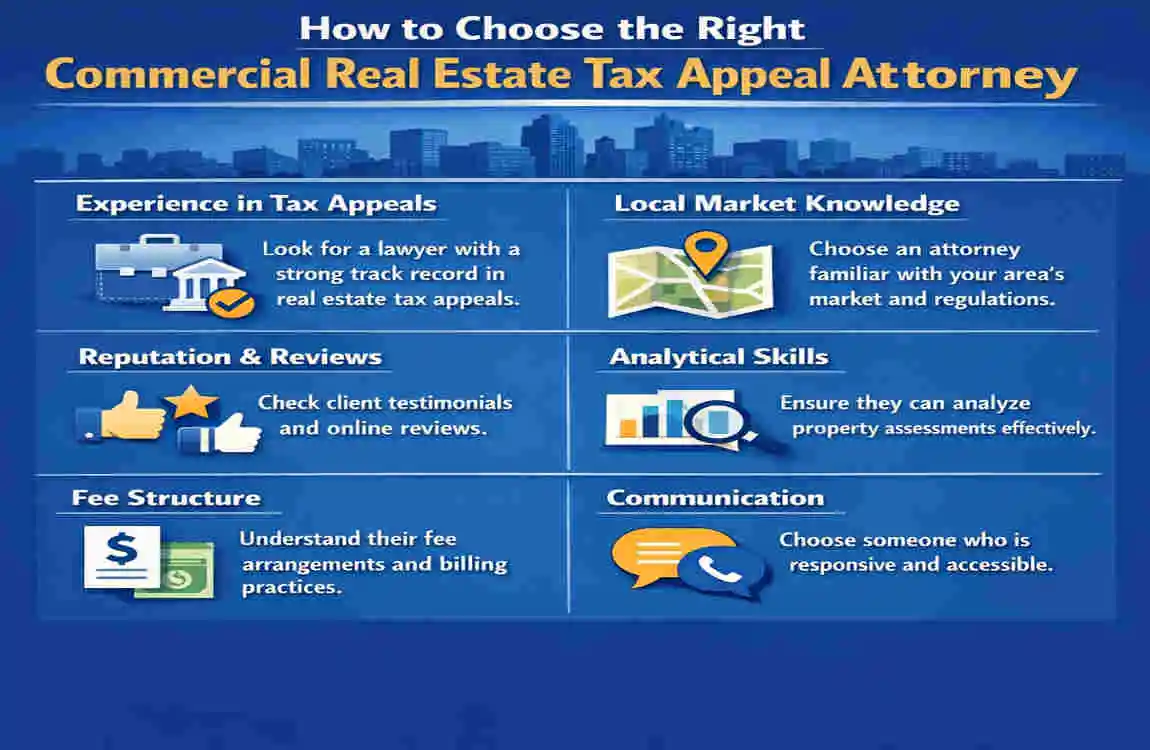
Choosing the right attorney can make a real difference. You want someone who understands both the law and the numbers.
Look for Commercial Property Experience
Not every tax attorney works with commercial property. Commercial cases can be more complex than residential ones because they often involve income, occupancy, and business use.
Look for someone who has handled:
- Office buildings
- Retail centers
- Industrial property
- Multi-tenant buildings
- Mixed-use properties
Check Local Knowledge
Property tax appeal rules vary by location. Deadlines, filing rules, and hearing steps can all differ.
A local attorney is often more effective because they already know the process and the people involved.
Ask About Similar Property Types
A warehouse is not the same as a shopping centre. A small office building is not the same as a large apartment property.
Ask whether the attorney has handled property like yours before.
Understand the Strategy
A strong attorney should be able to explain the appeal strategy in simple terms.
Ask questions like:
- What is the main argument?
- What evidence will we use?
- What is the likely outcome?
- What are the risks?
Confirm the Fee Structure
You should know exactly how you will be billed and what you are paying for.
Clear pricing prevents surprises later.
Who Will Handle the Work?
Some firms assign much of the work to junior staff. That is not always a problem, but you should know who will handle the main negotiations and hearings.
Frequently Asked Questions About Commercial Real Estate Tax Appeals
What does a commercial real estate tax appeal attorney do?
They help challenge a commercial property tax assessment that may be too high or inaccurate. They gather evidence, review the valuation, and represent the owner in the appeal process.
Is it worth appealing commercial property taxes?
It depends on the possible savings, the strength of your evidence, the cost of the appeal, and the local rules. For many owners, the answer is yes when the assessment looks too high.
When should I hire a commercial real estate tax appeal attorney?
Ideally, you should hire one before the local deadline and early enough to gather documents and valuation evidence.
How long does a commercial property tax appeal take?
It varies by location and case complexity. Some appeals are resolved relatively quickly, while others take months or longer.
What evidence is needed for a commercial tax appeal?
Common evidence includes comparable sales, income statements, expense records, property photos, appraisals, and proof of physical issues or vacancy.
Can an attorney reduce my commercial property taxes?
An attorney can challenge the assessment and present evidence, but no one can guarantee a reduction. The result depends on the facts and the decision-maker.
What happens if my tax appeal is denied?
You may have further review options depending on local law. That could include another hearing or a court appeal.
How much can a successful tax appeal save?
Savings depend on the reduction in assessed value and the local tax rate. In high-value properties, even a small reduction can mean significant savings.
Can I appeal without an attorney?
In some places, yes. But commercial cases can be technical, so many owners prefer professional help, especially for larger or more complex properties.
| Topic | Quick Information |
|---|---|
| What They Do | Help property owners challenge unfair or excessive commercial property tax assessments. |
| When to Hire | When the assessed value seems higher than the property’s actual market value. |
| Key Evidence | Property records, comparable sales, income data, expenses, and professional valuations. |
| Appeal Process | Review assessment → gather evidence → file appeal → attend hearing → receive decision. |
| Main Benefit | A successful appeal may reduce annual property tax expenses. |
| Who Needs One? | Commercial property owners, investors, landlords, and businesses with significant tax bills. |
