
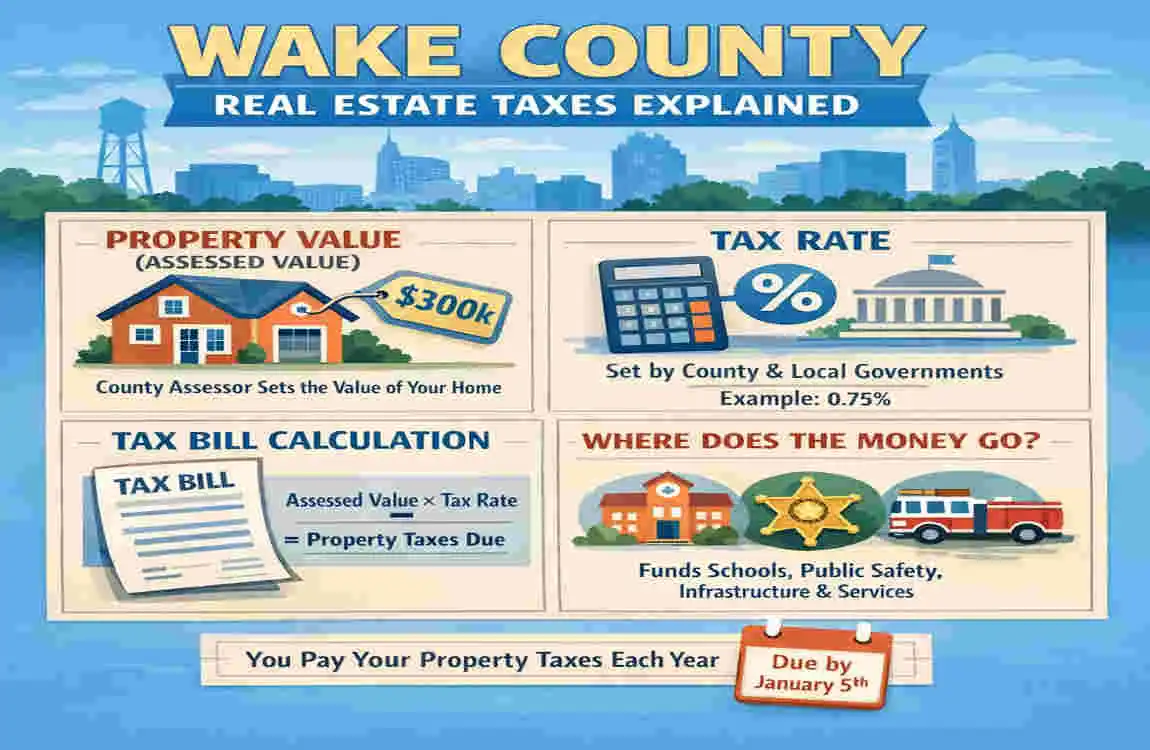
Understanding property taxes can feel overwhelming, especially if you’re a homeowner or planning to purchase real estate in Wake County, North Carolina. Property taxes are a crucial aspect of owning real estate, and knowing how they work can help save you time, money, and stress.
What Are Wake County Real Estate Taxes?

Real estate taxes, also referred to as property taxes, are an annual financial obligation for homeowners, investors, and property owners. These taxes are assessed and collected by local governments, including Wake County, to fund essential public services. If you own property in Wake County, you’ll need to stay on top of these taxes to avoid penalties and ensure compliance with local regulations.
Definition of Property Taxes
Property taxes are annual taxes levied on real estate properties. These taxes are based on the assessed value of your property and the applicable tax rates set by both county and municipal governments.
Essentially, the more valuable your property, the higher your tax bill will be.
Who Pays Property Taxes?
In Wake County, property taxes are paid by a variety of groups, including:
- Homeowners: Residential property owners pay taxes based on their home’s assessed value.
- Property Investors: Owners of rental properties or investment homes are responsible for property taxes, too.
- Commercial Property Owners: Businesses and owners of commercial spaces also contribute to property taxes.
Why These Taxes Are Important
Wake County depends on property taxes to fund public services that benefit everyone in the community. Here are some of the programs and services supported by property taxes:
- Public Schools: A significant portion of property taxes funds local schools, ensuring children receive a quality education.
- Public Safety: Taxes support police, fire departments, and emergency services.
- Roads and Infrastructure: Maintenance of roads, bridges, and public spaces is funded by property taxes.
- Parks and Recreation: Parks, trails, and recreational areas rely on this funding.
- Community Services: Libraries, social services, and other county programs are partially funded through property taxes.
How Wake County Real Estate Taxes Are Calculated
Understanding how your property taxes are calculated is essential for budgeting and financial planning. Wake County uses a straightforward formula based on your property’s assessed value and tax rates.
Property Assessment Value
Your property’s assessed value is the foundation of your tax calculation. Every few years, Wake County conducts a property revaluation to determine the current market value of your home or property. This value reflects what your property would likely sell for on the open market.
Factors influencing your property’s assessed value include:
- Location
- Property size
- Home condition
- Recent sales in your area
- Market trends
County Tax Rate
Wake County sets a base tax rate that applies to all properties within the county. This rate is expressed in terms of dollars per $100 of assessed property value.
For example, if the county tax rate is $0.60 per $100 of assessed value, a home assessed at $300,000 would owe $1,800 in county taxes annually.
Municipal Tax Rates
In addition to the county tax rate, you may also owe municipal taxes if your property is located within a town or city in Wake County. Each municipality sets its own tax rate, which is added to the county’s base rate.
For instance:
- If your property is in Raleigh, you’ll pay both the Wake County tax rate and the Raleigh municipal tax rate.
- Properties in unincorporated areas of Wake County only pay the county tax rate.
Tax Formula Explained
Here’s a simple way to calculate your property tax:
Property Tax = (Assessed Value ÷ 100) × (County Tax Rate + Municipal Tax Rate)
Wake County Property Tax Assessment Process
Tax assessments determine how much you owe each year. Wake County has a detailed process for evaluating property values, ensuring fairness and accuracy.
How Properties Are Assessed
Wake County uses a mass appraisal system to assess property values. This system evaluates groups of properties based on similar characteristics, such as location, size, and property type.
Revaluation Schedule
Property assessments in Wake County are updated every four years through a revaluation process. During this period, the county reviews property values to reflect changes in the market.
If property values in your neighborhood have risen significantly, you may see an increase in your assessed value — and your tax bill.
Factors Affecting Property Value
Several factors influence how much your property is worth, including:
- Location: Properties in high-demand areas tend to have higher values.
- Home Size and Condition: Larger homes or those in excellent condition are assessed at higher values.
- Recent Sales: Comparable home sales in your area can impact your assessed value.
- Market Trends: Rising real estate demand can drive up property values.
Payment Deadlines and Methods
Paying your property taxes on time is essential to avoid penalties. Wake County makes it easy to pay using several methods.
Annual Payment Due Dates
Property taxes in Wake County are billed annually. The main deadlines are:
- Tax Bills Issued: Typically sent in July.
- Payment Due Date: Taxes are due by 5 January of the following year.
Online Payments
Wake County offers a convenient online payment portal where you can pay using a credit card, debit card, or bank transfer.
Mail Payments
You can also mail a check or money order to the Wake County Tax Office. Be sure to include your tax account number to ensure your payment is properly applied.
In-Person Payments
Prefer to pay in person? Visit the Wake County Tax Administration office to pay by cash, check, or card.
Late Payment Penalties
Missing the payment deadline can result in interest and penalties. Interest begins accruing on 6 January, and the longer you wait, the more you’ll owe.
Property Tax Exemptions and Relief Programs
Wake County offers several programs to help eligible property owners reduce their tax burden.
Senior Citizen Tax Relief
If you’re 65 or older and meet income requirements, you may qualify for a reduced property tax rate.
Disabled Homeowner Programs
Homeowners with disabilities can apply for special programs that lower their tax obligations.
Veteran Exemptions
Veterans and their surviving spouses may qualify for property tax exemptions, depending on their service history and disability status.
Present-Use Value Program
This program benefits property owners who use their land for farming, forestry, or similar purposes by offering tax reductions based on use.
How to Apply
To apply for any of these exemptions, contact the Wake County Tax Office and submit the necessary forms and documentation.
How to Appeal Your Property Assessment

If you believe your property’s assessed value is too high, you have the right to appeal.
Reasons to Appeal
Common reasons for appealing include:
- Incorrect property details (e.g., square footage, condition)
- Overestimated market value
- Changes in property use
Required Documents
Prepare evidence such as comparable sales data, photos, or appraisals to support your case.
Appeal Process
Submit your appeal to the Wake County Board of Equalization and Review. A hearing will be scheduled to review your case.
Timeline
Appeals must typically be filed within 30 days of receiving your assessment notice.
Tips to Reduce Your Wake County Property Tax Bill
- Verify Assessment Accuracy: Ensure your property details and value are correct.
- Apply for Exemptions: Take advantage of eligible tax relief programs.
- Review Comparable Sales: Check recent sales in your area to ensure your assessment is fair.
- File an Appeal: If your assessment seems too high, file an appeal.
- Pay on Time: Avoid penalties by paying before the deadline.
Common Mistakes Property Owners Should Avoid
- Missed Deadlines: Late payments incur costly penalties.
- Ignoring Reassessment Notices: Review your property value after each revaluation.
- Forgetting Exemptions: Don’t miss out on valuable tax relief programs.
- Assuming Assessed Value = Market Value: These values aren’t always the same.
- Not Reviewing Tax Bills: Errors can happen, so double-check your bills.
Frequently Asked Questions (FAQ)
How are Wake County real estate taxes calculated?
Taxes are based on your property’s assessed value and the combined county and municipal tax rates.
When are Wake County property taxes due?
Taxes are due by 5 January each year.
Can I pay Wake County property taxes online?
Yes, you can make payments through the county’s online portal.
How do I appeal my property tax assessment?
File an appeal with the Wake County Board of Equalization and Review.
Are there tax exemptions for seniors?
Yes, seniors meeting income requirements may qualify for reduced taxes.
| Topic | Information |
|---|---|
| What Are Wake County Real Estate Taxes? | Annual property taxes paid by homeowners and property owners in Wake County, North Carolina. |
| Who Collects the Taxes? | Wake County Tax Administration collects county property taxes, while municipalities may collect additional taxes. |
| How Is Tax Calculated? | Assessed Property Value × Combined Tax Rate = Annual Property Tax. |
| Property Assessment | Wake County determines your property’s assessed market value for taxation purposes. |
| Tax Rate | The total tax rate includes the Wake County rate plus any applicable city or special district taxes. |
| Payment Due Date | Property tax bills are generally due each year by January 5 to avoid interest and penalties. |
| Revaluation Process | Property values are periodically reassessed to reflect changes in the local real estate market. |
| Available Exemptions | Eligible homeowners may qualify for tax relief programs, including exemptions for seniors, disabled individuals, and disabled veterans. |
| How to Pay | Taxes can be paid online, by mail, in person, or through participating financial institutions. |
